September 8, 2026
Spot rates rise sharply as seasonally expected
For the first time since May, broker-posted spot rates in the Truckstop.com system rose for all equipment types during the week ended September 4 (week 35). The total market rate, which has declined during most weeks of that period, also rose by the most since May. Spot rate gains are the norm for comparable weeks as the week heading into Labor Day often is the strongest week between the mid-year peak and around Thanksgiving. Among the week’s milestones is the first flatbed rate increase in 12 weeks.
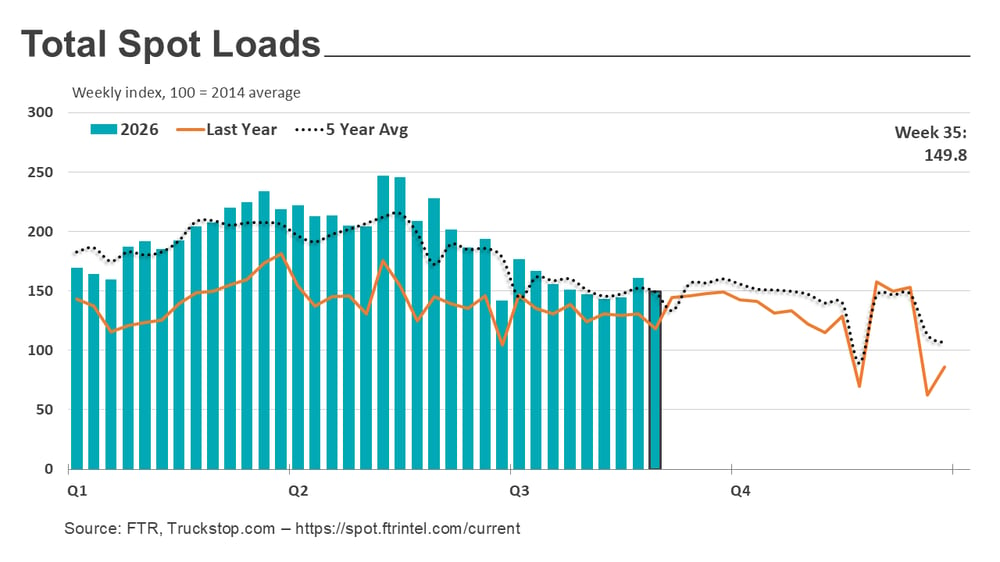
Total load activity decreased 6.9% week over week after rising around 11% in the previous week. Volume was up nearly 27% versus the same 2025 week. For a second straight week, truck postings declined 2.2%. The Market Demand Index – the ratio of loads to trucks – pulled back from the previous week’s level, which had been the highest in six weeks.
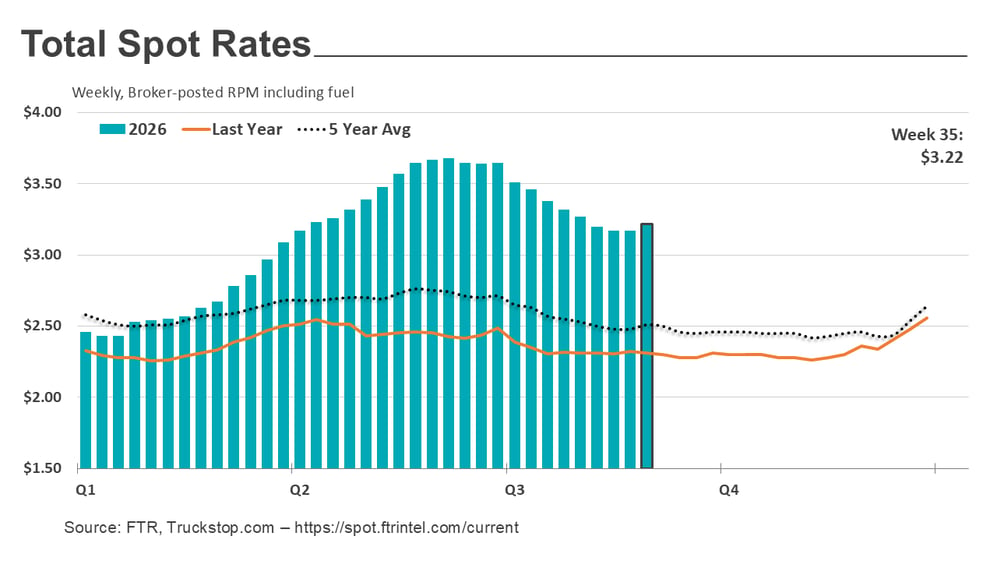
The total market broker-posted rate rose just over 9 cents week over week, largely in line with seasonal expectations but the largest gain during the week since 2021. Rates were up more than 39% versus the same 2025 week.
Excluding a calculated fuel surcharge, total spot rates were up about 38% year over year. Although carriers operating in the spot market typically do not receive surcharges, the calculation serves as a proxy for the portion of the rate needed to recover fuel costs. That calculation is based on diesel prices as of the week ended August 31 – a week that saw a small decrease in diesel prices – and does not reflect what likely was a record-setting week in the price of diesel nationwide based on estimates late last week by AAA.
Historically, the current week (week 36) usually sees week-over-week spot rate decreases for all three principal equipment types, although that pattern is most consistent with dry van and least consistent for flatbed.
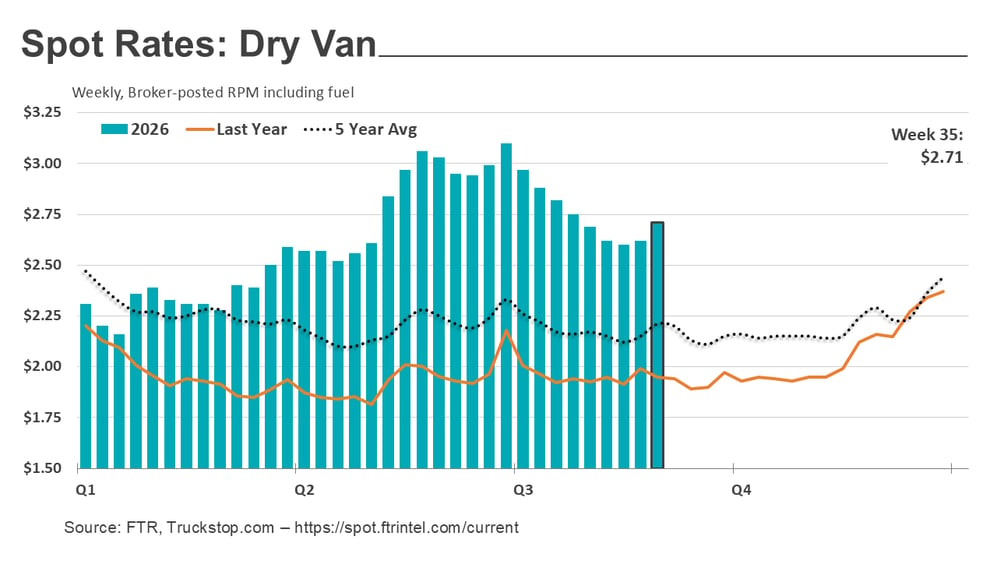
Dry van spot rates increased just over 9 cents for the largest gain in nine weeks. Rates, which were nearly 39% higher than in the same 2025 week, rose by a bit more than has been typical for comparable weeks in recent years. Dry van spot rates declined slightly on the West Coast and in the Mountain Central region but were up strongly elsewhere.
Dry van loads declined 4.2% week over week. Volume was more than 42% higher than in the same 2025 week – the strongest prior-year comparison since May due mainly to the fact that week 35 last year included Labor Day. Loads increased in the Mountain Central region and were basically flat in the Midwest and West Coast. Volume fell week over week elsewhere.
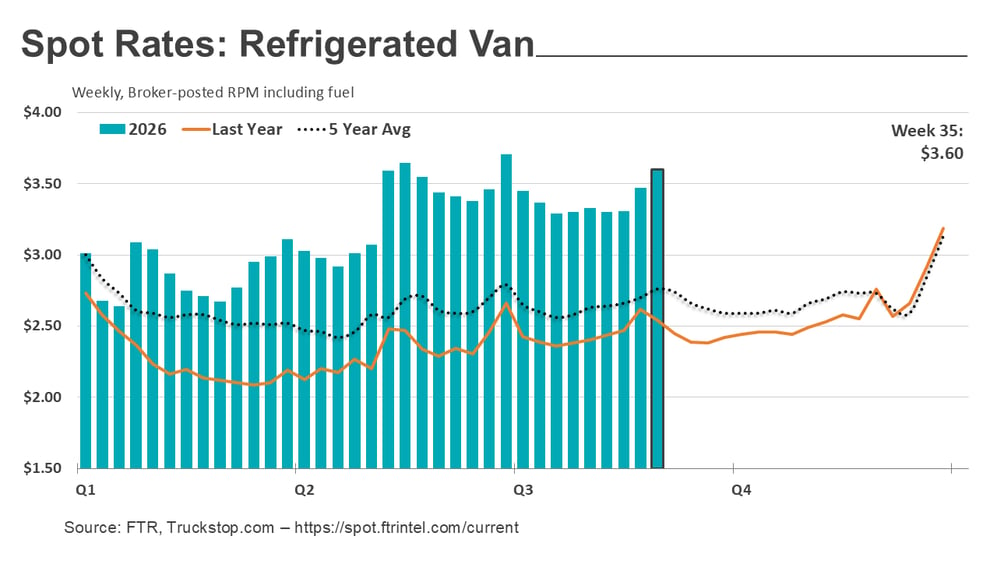
Refrigerated spot rates jumped just over 13 cents after soaring close to 16 cents during the previous week. The increase technically was the largest during a comparable week since at least 2008, although it often is very close to this year’s gain for that week. Rates were up close to 42% versus the same week last year and increased for a third straight week for the first time since May. Refrigerated spot rates were up week over week in all regions, led by the Midwest, Mountain Central, and West Coast.
Refrigerated loads eased just 0.4% after rising about 12% during the previous week. Volume was 44% higher than during the same 2025 week due to the holiday distortion. Load postings fell fairly sharply in the Northeast, declined modestly in the Midwest, barely changed on the West Coast, and were up elsewhere, especially in the South Central region.
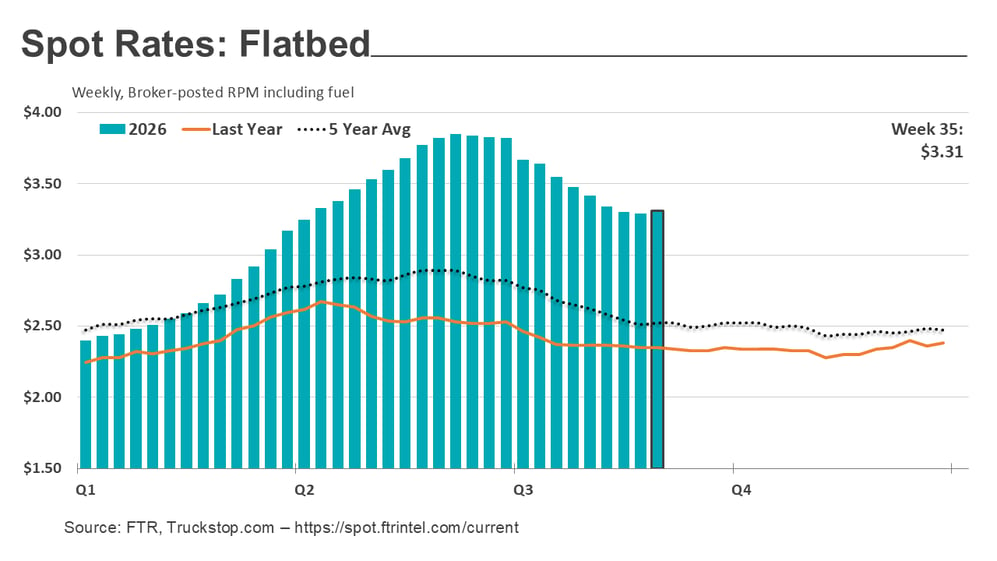
Flatbed spot rates rose nearly 3 cents week over week for the first increase since mid-June. Rates followed the typical seasonal pattern with an increase during the week heading into Labor Day, often breaking an extended streak of falling rates. Flatbed rates, which were up nearly 41% year over year, fell week over week in the South Central region but were up elsewhere, especially in the Midwest and Northeast.
Flatbed loads decreased 9.7% – exactly reversing the prior week’s percentage increase. Volume was up versus the same 2025 week but at about 17%, the year-over-year comparison trailed those of dry van and refrigerated. Load postings fell in all regions, and the decreases were especially large in the South Central and Southeast regions.
Go beyond the data with the minds of FTR & Truckstop
 Updated weekly on Tuesday, FTR's Avery Vise analyzes Truckstop data and more.
-1.png?width=1000&height=1000&name=Untitled%20design%20(4)-1.png) Truckstop's Brent Hutto dishes on spot market activity and other hot topics.
Truckstop's Brent Hutto dishes on spot market activity and other hot topics.