September 21, 2026
Van spot rates decline while flatbed rates rise
Broker-posted spot rates in the Truckstop.com system were mixed during the week ended September 18 (week 37) as flatbed spot rates rose sharply while dry van and refrigerated van rates weakened in line with seasonal expectations. Spot rate increases for comparable weeks are quite rare for all three principal equipment types, but the increase in flatbed rates was the largest in a corresponding week since at least 2008. Van spot rates almost always decline further during the current week (week 38).
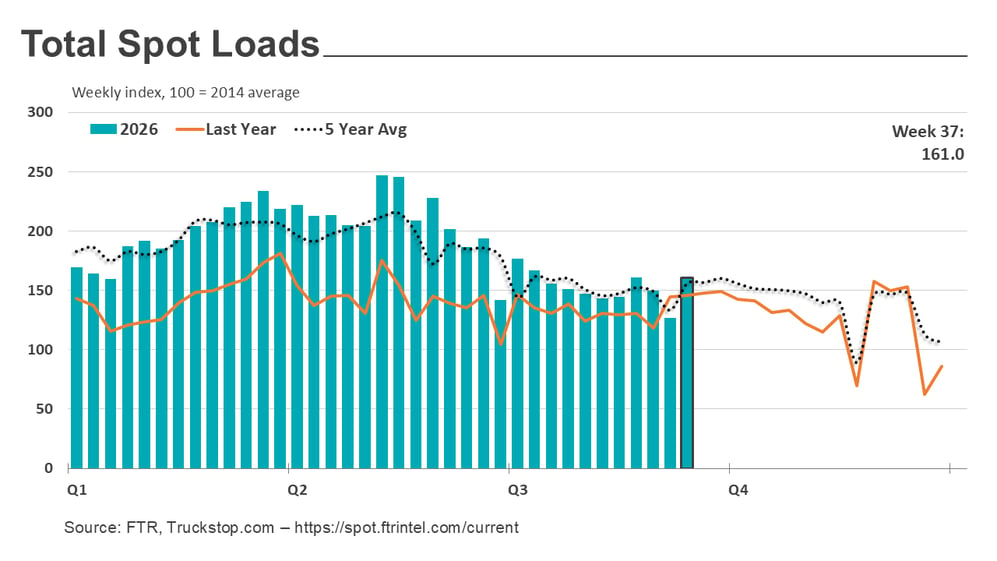
Total load activity rebounded 26.7% following the Labor Day holiday week. Volume, which was at the strongest level in nine weeks, was up about 10% versus the same 2025 week. Truck postings jumped 13.3% after three straight weeks of decline, and the Market Demand Index – the ratio of loads to trucks – rose to its highest level in three weeks.
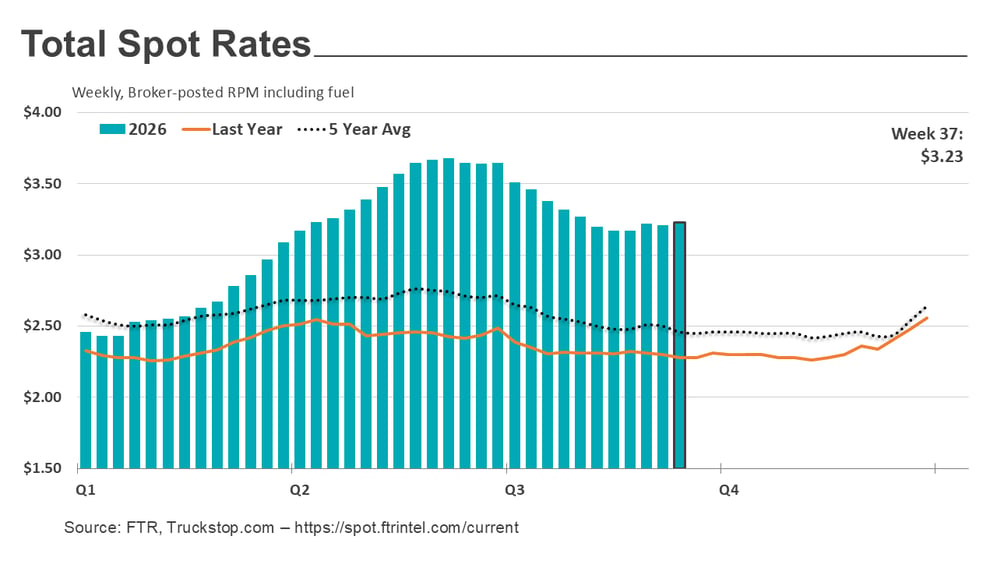
The total market broker-posted rate increased 2 cents a mile week over week due to flatbed. Rates were up about 41% versus the same 2025 week. Rates excluding a calculated fuel surcharge remained strong but trailed the all-in rate at about 35% higher year over year. Although carriers operating in the spot market typically do not receive surcharges, the calculation serves as a proxy for the portion of the rate needed to recover fuel costs.
Fuel-adjusted spot rates are based on the record weekly average diesel price of $6.285 a gallon logged during the week ended September 14, according to the Energy Information Administration. According to AAA, the national average diesel price as of September 21 was just over $6.51 a gallon.
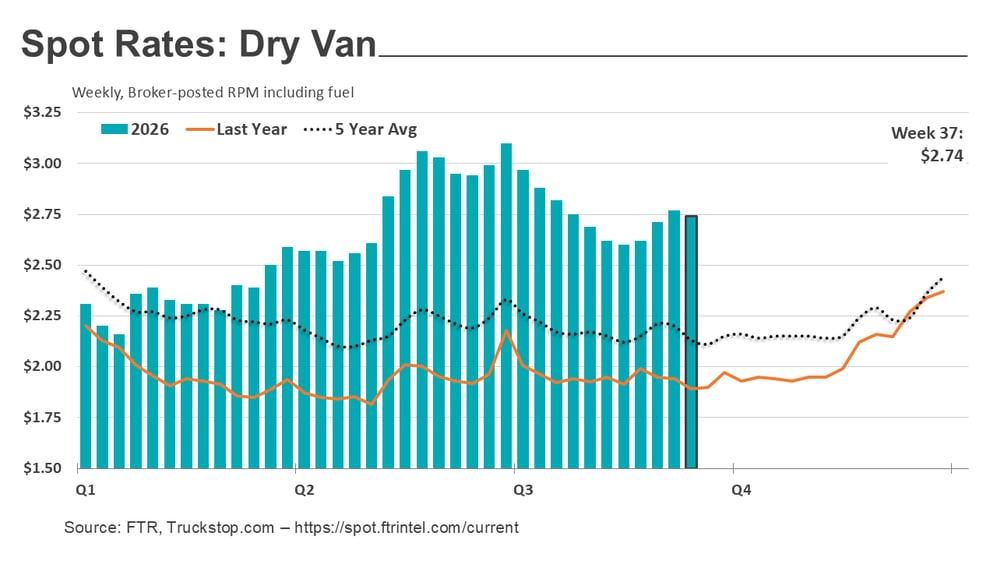
Dry van spot rates decreased just under 3 cents. Rates were close to 45% higher than during the same 2025 week. Dry van spot rates rose sharply week over week on the West Coast and increased modestly in the Mountain Central region but fell in all other regions.
Dry van loads rebounded 27.8% following the holiday week. Volume was up 28.5% versus the same 2025 week. Load postings jumped in all regions.
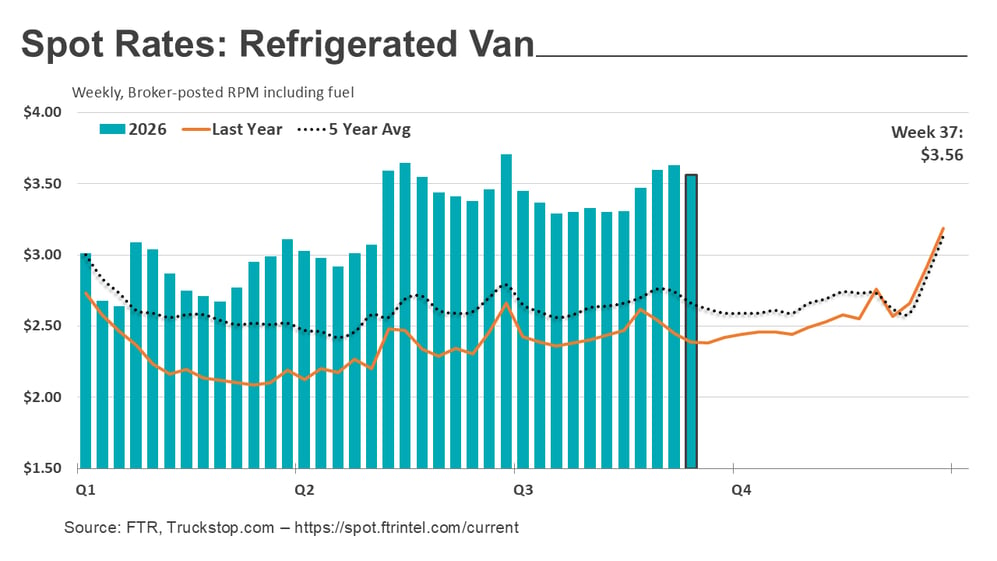
Refrigerated spot rates dropped 6.4 cents for the first decrease in five weeks. Rates were up about 49% versus the same 2025 week – the strongest comparison in 15 weeks. Refrigerated spot rates rose in the West Central, South Central, and West Coast regions but fell sharply in the Midwest and Southeast and were down in the Northeast as well.
Refrigerated loads rose 14%. Volume was close to 38% higher than during the same 2025 week. Load postings rose in all regions, although the increase in the South Central region was notably softer than it was elsewhere.
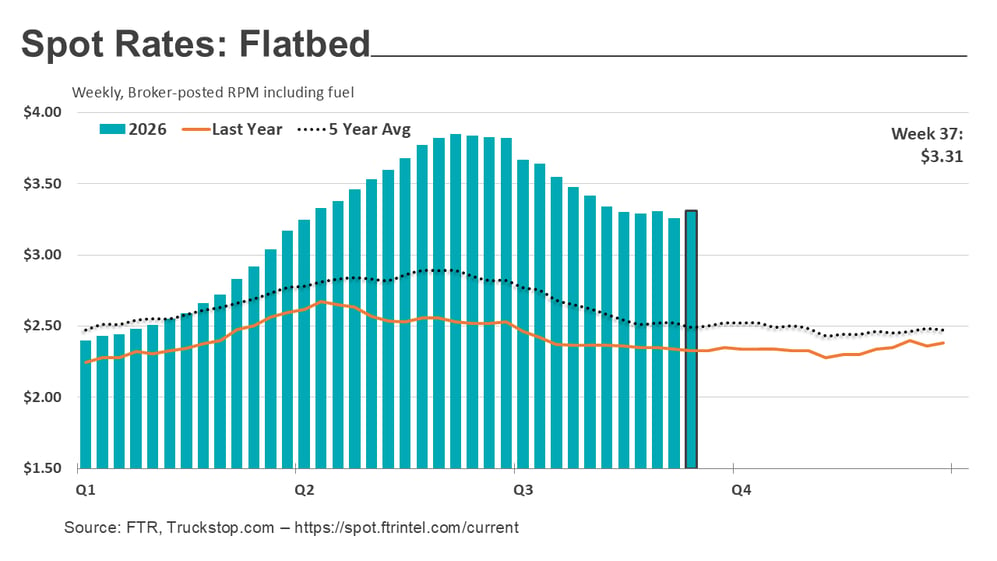
Flatbed spot rates rose more than 5 cents. Rates were about 42% higher than during the same 2025 week. Flatbed rates were up week over week in all regions, led by an increase of 9.6 cents on the West Coast.
Flatbed loads bounced back by 29.9% to the strongest level in eight weeks. Load postings, which were down about 1% year over year, rose sharply in all regions.
Go beyond the data with the minds of FTR & Truckstop
 Updated weekly on Tuesday, FTR's Avery Vise analyzes Truckstop data and more.
-1.png?width=1000&height=1000&name=Untitled%20design%20(4)-1.png) Truckstop's Brent Hutto dishes on spot market activity and other hot topics.
Truckstop's Brent Hutto dishes on spot market activity and other hot topics.